Choosing a wall panel for an exterior project involves more than selecting a durable surface. Fiber cement board can serve as a stable cladding or sheathing component, but its success depends on the full wall assembly, including framing, water control, joints, and finish. Understanding these relationships helps project teams assess where fiber cement board fits in modern building systems and what must be resolved before specifications are finalized.
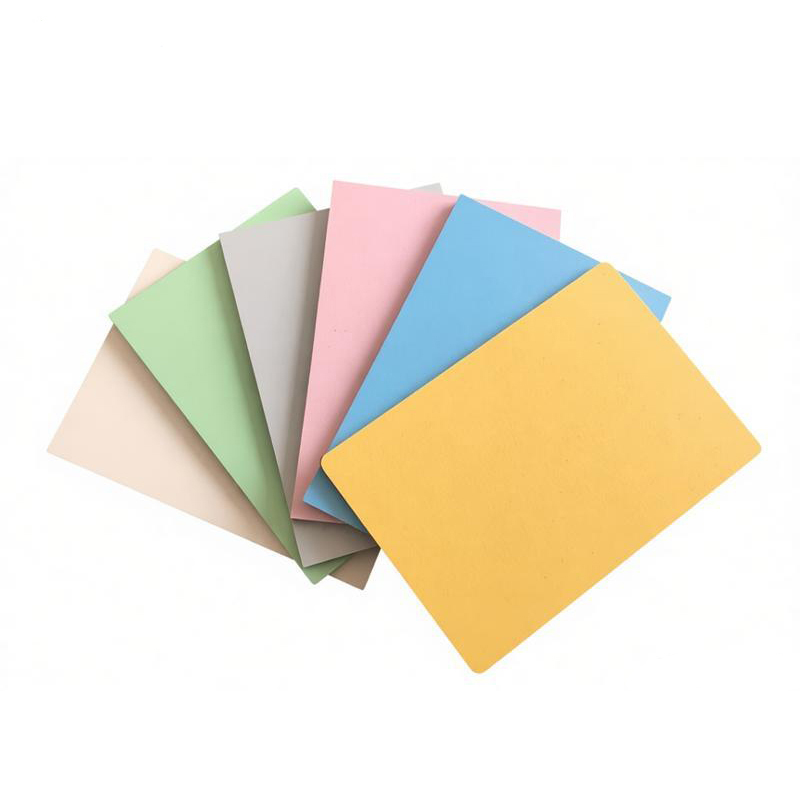
For exterior walls, fiber cement board is valued for its cement-based composition and compatibility with varied architectural finishes. It may be specified in ventilated facades, rainscreen assemblies, or other cladding systems when product properties and installation details suit the design. The key is to treat fiber cement board as one part of a coordinated envelope, rather than as a standalone solution to weather exposure.
The intended function determines how fiber cement board should be evaluated. As exposed cladding, it provides the visible exterior layer and must meet the project’s requirements for appearance, weather exposure, and maintenance. As a substrate or sheathing layer, fiber cement board has a different role, and the designer must confirm how it works with the selected membrane, insulation, framing, and outer finish.
These functions should not be confused during specification. A fiber cement board product approved for one assembly may not automatically be suitable for another, even if the panel dimensions appear similar. Review the manufacturer’s technical documentation for permitted applications, thickness, edge conditions, fastening guidance, and finish compatibility. Confirming intended use early helps avoid redesign after facade details have been coordinated.
Exterior wall design balances water shedding, drying potential, structural support, thermal performance, and visual intent. Fiber cement board can contribute a robust panel surface, but it does not replace a properly designed drainage plane or flashing strategy. The assembly should direct bulk water outward and provide a planned route for incidental moisture to drain or dry without becoming trapped behind the cladding.
Project teams should also account for local exposure, building height, wind loading, and the chosen support structure. Fiber cement board selection needs to align with applicable codes and project-specific engineering, rather than relying on a generic assumption about panel strength. Establishing these performance priorities first makes it easier to compare finishes and attachment approaches on a consistent basis.
A modern facade is a sequence of coordinated layers, not simply a panel fixed to a wall. Fiber cement board may sit outside a weather-resistive barrier, insulation, and drainage or ventilation space, depending on the specified system. Drawings should show how each layer continues at corners, openings, parapets, and transitions to roofs or other materials, because these junctions often require the most careful coordination.
Where a ventilated cavity is used, fiber cement board forms the outer screen while the cavity supports drainage and airflow as designed. Cavity depth, fire stopping, insect protection, and opening details need to follow project requirements and tested assembly guidance. This arrangement can help manage water behind the panel, but the panel itself should not be treated as the sole waterproof barrier.
Panel size, thickness, edge treatment, color, and surface finish influence both facade appearance and installation planning. Fiber cement board formats should suit the support spacing and joint layout, while cut edges and penetrations need the treatment specified for that product. A pre-coated option may streamline finish coordination, but the project team should verify color consistency, repair procedures, and compatibility with exposed conditions.
Mock-ups are useful when the design includes prominent joints, multiple colors, or transitions between materials. They let architects, contractors, and owners review the appearance of fiber cement board at realistic viewing distances and check how the details are built. The mock-up should include representative corners, fixings, sealant or open joints, and window interfaces, not just a flat sample panel.
Reliable installation begins with a substrate that is sound, aligned, and suitable for the specified attachment system. Fiber cement board must be supported and fastened according to product instructions, engineering requirements, and the intended exposure. Fastener type, spacing, edge distance, and corrosion resistance all matter; substitutions should be reviewed rather than made informally in the field.
Joint design must allow for the movement expected in the assembly and accommodate the selected panel layout. Fiber cement board should not be forced into a detail that blocks drainage or transfers unintended stress to edges and fixings. Coordinate control joints with framing, openings, and changes in wall geometry, and make sure sealant details, where specified, are compatible with adjacent materials.
Before installation, confirm that delivered fiber cement board matches approved documentation and has been stored and handled as directed. Inspect panels for damage, keep cut areas clean, and follow guidance for cutting, dust control, and protective equipment. A clear site method statement helps crews maintain consistent workmanship while reducing avoidable damage during handling and fitting.
After installation, maintenance depends on the finish, exposure, and project requirements. Fiber cement board should be inspected as part of routine facade care, with attention to joints, flashings, fixings, and signs of impact or water entry. Repairs should use compatible materials and follow product guidance. Recording the installed system and maintenance instructions gives building operators a practical basis for future inspections.
Yes, fiber cement board can be used as exterior cladding when the selected product is approved for that application and the complete wall assembly is properly designed. Confirm exposure limits, attachment details, finish requirements, and drainage provisions for the specific project.
Usually, fiber cement board is not a substitute for the wall’s weather-resistive barrier. The assembly should include the specified water-control layer, flashing, and drainage strategy. Product documentation and local requirements determine how these components are arranged.
Verify intended use, dimensions, finish, structural support, fastening instructions, joint design, and compatibility with adjacent materials. For a defined application, review the product information and coordinate details with the architect, contractor, and relevant technical professionals.
 EN

