Building owners and facility managers constantly seek materials that reduce ongoing maintenance burdens while maintaining structural integrity and aesthetic appeal. Fiber cement board has emerged as a transformative solution that significantly decreases maintenance requirements over the operational life of a building. Unlike traditional materials that demand frequent repairs, repainting, and replacement cycles, fiber cement board offers exceptional durability and stability that translate directly into lower maintenance costs and reduced operational complexity for property managers and construction professionals.
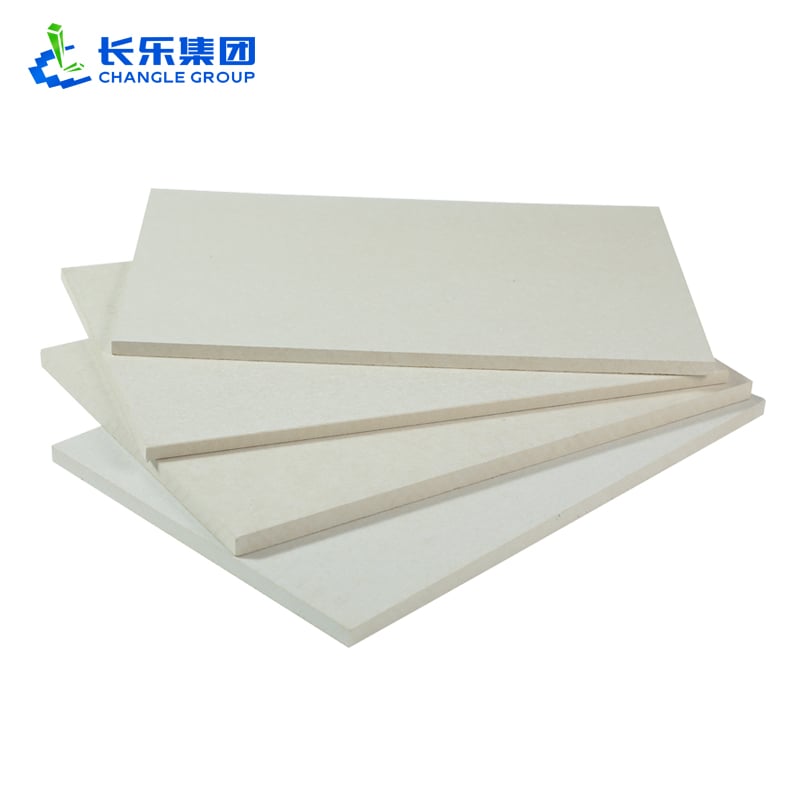
The science behind this performance advantage lies in the material composition and manufacturing process. Fiber cement board combines Portland cement, cellulose fibers, and mineral additives to create a product that resists warping, cracking, and deterioration far better than wood, vinyl, or traditional plaster-based solutions. This inherent resistance to environmental stressors means that fiber cement board requires minimal intervention over decades of service, making it an economically intelligent choice for commercial facilities, residential developments, and industrial applications where maintenance budgets must be carefully managed.
Fiber cement board achieves its superior durability through material science principles that directly counter the primary failure modes affecting competing materials. Traditional wood products absorb moisture, leading to swelling, warping, and eventually rot; fiber cement board remains dimensionally stable even when exposed to fluctuating humidity levels. The cellulose fiber reinforcement within fiber cement board creates a matrix that distributes stress evenly across the material, preventing the stress concentration points that cause cracking in brittle alternatives like concrete or ceramic materials. This microstructural advantage means that fiber cement board can expand and contract with seasonal temperature variations without developing the microfractures that eventually compromise material integrity and necessitate costly repairs.
Chemical resistance represents another critical durability advantage of fiber cement board. The alkaline nature of Portland cement in fiber cement board formulations resists acidic degradation from environmental contaminants, industrial pollution, and weathering cycles. Fiber cement board maintains its structural properties even in harsh coastal environments where salt spray would rapidly corrode steel fasteners or degrade wood composites. This chemical stability means building exteriors clad with fiber cement board avoid the accelerated degradation patterns that trigger premature replacement needs, allowing maintenance-conscious facility managers to extend asset life well beyond the service expectations of traditional materials.
Fiber cement board demonstrates exceptional resilience against ultraviolet radiation, freeze-thaw cycles, and biological colonization that typically compromise building material longevity. Unlike paint-based protective systems that require five to seven year reapplication cycles, fiber cement board maintains color stability and surface integrity across multiple decades without repainting interventions. The mineral composition of fiber cement board provides inherent UV resistance, eliminating the fading and surface degradation that plague painted wood or composite surfaces. Freeze-thaw cycles that cause spalling in concrete or delamination in laminated materials pass through fiber cement board without inducing structural damage, because the material's controlled porosity and fiber reinforcement accommodate ice formation without creating destructive expansion forces.
Biological growth prevention contributes meaningfully to the maintenance advantage delivered by fiber cement board. Mold, mildew, and algae colonization require sustained moisture retention within substrate materials; fiber cement board's low moisture absorption and quick-dry characteristics create an inhospitable environment for biological growth, even in humid climates or shaded building exposures. This biological resistance eliminates expensive pressure washing, chemical treatment, and surface refinishing cycles that building maintenance teams budget for wood siding, fiber-reinforced composite panels, or porous cementitious materials. The cumulative maintenance savings from avoiding biological remediation alone justify fiber cement board selection in applications where traditional materials would require annual or biennial treatment interventions.
The financial advantage of fiber cement board emerges clearly when building owners project twenty, thirty, or fifty-year maintenance requirements across the full asset lifecycle. A typical commercial building clad with wood siding requires repainting every five to seven years, with each cycle costing fifteen to thirty percent of the original material installation expense; fiber cement board eliminates these recurring painting costs entirely while delivering superior aesthetic consistency across the ownership period. Fiber cement board also avoids the wood replacement cycles that occur when original materials reach end-of-life after twenty to thirty years of service, whereas fiber cement board installations regularly exceed fifty-year service intervals without structural compromise or aesthetic degradation requiring intervention.
Maintenance labor and operational disruption costs compound the economic advantage of fiber cement board selection. Scheduled painting projects, material replacement cycles, and reactive repairs require coordinating external contractors, securing building occupants from work areas, and managing the productivity losses associated with maintenance activities in operational facilities. Fiber cement board's stability eliminates the frequency and scale of these disruptions, allowing building operations to proceed uninterrupted by major maintenance interventions. Facility managers can allocate maintenance budgets to systems that deliver immediate operational value rather than consuming resources on repetitive cycle maintenance for compromised envelope materials. The freed maintenance budget can be redirected toward systems upgrades, energy efficiency improvements, or deferred maintenance resolution that enhance overall facility performance and value.
Fiber cement board enables building owners to forecast maintenance expenses with confidence, eliminating the budget uncertainty and cost surprises that plague facilities relying on less durable materials. Multi-year financial projections become reliable when fiber cement board is specified, because the material does not introduce hidden replacement or remediation costs into operational budgets. This predictability advantage extends beyond direct maintenance costs to influence property valuation, financing terms, and insurance considerations, as lenders and insurers recognize the reduced risk profile associated with fiber cement board installations. Long-term operational budgets can allocate modest contingency reserves rather than substantial recurring maintenance line items, improving overall facility profitability and operational efficiency across the extended ownership period.
Proper installation practices ensure fiber cement board realizes its full maintenance reduction potential throughout the building lifecycle. Correct fastening techniques, adequate weather sealing at penetrations and transitions, and appropriate flashing installation create a weathertight envelope that prevents water intrusion and related degradation pathways. Fiber cement board's inherent durability amplifies the benefits of quality installation practices, because the material will not degrade even if installation-related minor water exposure occurs; traditional materials would develop rot or structural compromise in identical circumstances, triggering corrective maintenance long before end-of-life expectations. Installation quality becomes a non-critical maintenance driver when fiber cement board is specified, shifting the risk-benefit equation dramatically in favor of long-term cost predictability and operational simplicity.
Mechanical fastening of fiber cement board allows straightforward repair and modification processes that minimize future maintenance complexity. Unlike materials bonded with adhesive or requiring specialized fastening systems, fiber cement board can be quickly removed, replaced, or repaired using standard tools and processes familiar to general maintenance personnel. This accessibility advantage extends the practical maintenance life of fiber cement board installations, because isolated damage or localized degradation can be corrected through simple part replacement rather than triggering extensive system remediation. Building maintenance teams can execute corrective action without specialized contractors or extended learning curves, keeping repair costs minimal and response times rapid when replacement needs arise.
Fiber cement board eliminates the complex diagnostic requirements that characterize maintenance programs for less durable materials. Visual inspection protocols suffice to assess fiber cement board condition, because the material does not hide subsurface degradation pathways or require specialized equipment to evaluate structural integrity. Maintenance personnel can confidently assess fiber cement board status through direct observation, identifying any rare damage requiring corrective action without involving specialized engineers or diagnostic contractors. This inspection simplicity reduces ongoing maintenance program complexity and cost, allowing maintenance resources to focus on systems requiring genuinely specialized expertise rather than consuming time on unnecessary diagnostic protocols for durable, stable materials like fiber cement board.
Fiber cement board regularly performs reliably for forty to fifty years or longer, with many installations demonstrating minimal degradation after fifty years of continuous exposure. This extended service life far exceeds traditional materials like wood siding, which typically requires replacement after twenty to thirty years, or painted surfaces that demand recoating every five to seven years. The durability of fiber cement board means most building owners will never require full fiber cement board replacement during their ownership period, eliminating one of the largest lifecycle maintenance expenses associated with alternative envelope materials.
Fiber cement board maintains its aesthetic appearance and functional properties without regular refinishing or specialized cleaning interventions. Occasional gentle cleaning with water and mild detergent suffices to address surface dust accumulation or environmental soiling, but fiber cement board does not require the intensive maintenance that painted surfaces, stained wood, or composite materials demand. The material's inherent resistance to UV damage, biological growth, and weathering means that fiber cement board retains color and appearance stability across decades without the cyclical repainting, restaining, or refinishing that budget-conscious facility managers must schedule for competing materials.
Fiber cement board demonstrates exceptional resistance to severe weather conditions including high winds, heavy precipitation, hail, extreme temperature fluctuations, and freeze-thaw cycles. The material's dimensional stability, moisture resistance, and fiber reinforcement allow fiber cement board to withstand weather extremes without cracking, warping, or delamination that compromises structural integrity or requires emergency repairs. Building owners in hurricane zones, regions experiencing extreme temperature variations, or areas with heavy precipitation can confidently specify fiber cement board knowing the material will perform reliably without weather-triggered maintenance emergencies or age-accelerated degradation.
 EN

